The Road to Awe
(or, a smart-dumb idea whose time has come)

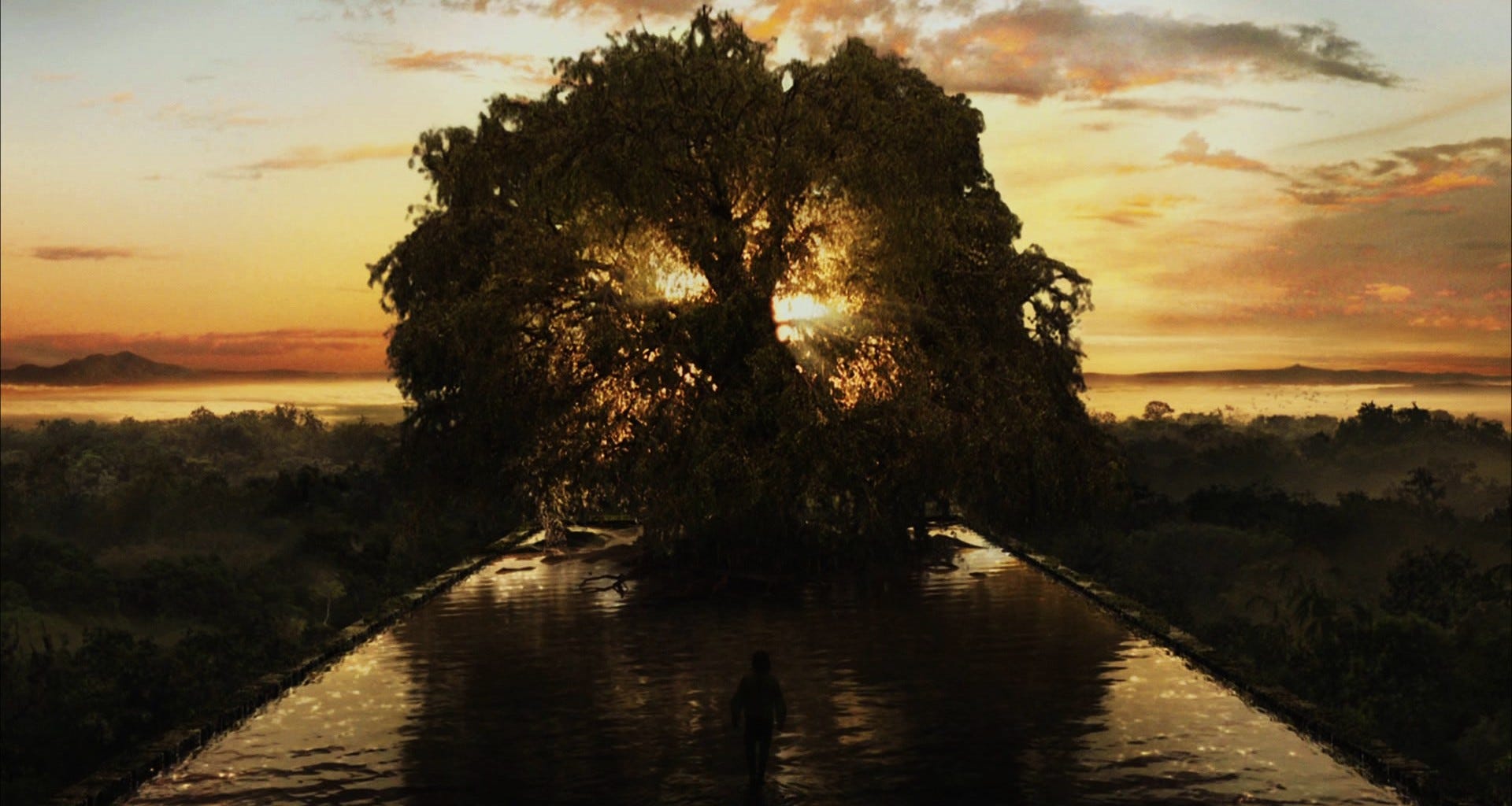
HEAR ME OUT: what if movies were better twenty years ago? Or at least, the ones released every weekend by major motion picture studios? This hot take should be impossible to disagree with for those of us throttling head-first into middle age, unless you’re one of the Odyssey/Brand New Day lotus-eaters. It’s also so broad and basic it must be dismissed. I came of age at a time when the “digital revolution” allegedly threatened to upend cinema (making, distributing, exhibiting, criticizing, you name it), so every year of moviegoing added up to a kind of “temperature check” on the health of the medium. Movies were still monoculture, such that I could go to the multiplex every weekend (and some weeknights) relatively affordably, and was offered a variety of cinema that’s outright stunning compared to what’s in wide release today. The center seemed to be holding just fine. Even the junk movies from that year look better than the junk of 2016 or 2026, largely because they were still shot on celluloid, and the digital uncanny hadn’t crept into every last nook and cranny of their images (to say nothing of “artificial intelligence”.)
In 2021, just after we crossed into the second year of COVID, MUBI Notebook’s then-editor Gina Telaroli courageously OKed a personal (which is to say, insane) pitch from me to write a reflection on the 15th anniversary of Alejandro Agresti’s 2006 metaphysical romance The Lake House, which opened like this:
A decade and a half is not really long enough to commemorate a film’s anniversary—but then again, bogus nostalgia for the immediate past is the main engine of pop culture discourse today. So here’s a wild proposition: what if 2006 was the last great year for adventurous, bigger-budget movies? It’s impossible to answer, of course, but consider these studio releases: Marie-Antoinette, Children of Men, Southland Tales, Clint Eastwood’s Iwo Jima diptych, Inside Man, Miami Vice, Idlewild, Crank, Idiocracy, The Holiday, The Black Dahlia. Millions were spent on bizarre highbrow and/or vanity projects like Michel Gondry’s The Science of Sleep, Soderbergh’s The Good German, Tommy Lee Jones’ (phenomenal) The Three Burials of Melquiades Estrada, or Ryan Murphy’s (excruciating) Running With Scissors. World Trade Center and United 93 both tried going for the jugular without losing audiences in accusations of poor taste, with scattered and discouraging results. Linklater’s A Scanner Darkly, easily the best in an otherwise risible spate of mid-aughts Phillip K. Dick adaptations, relocated PKD’s hippie colony nightmare to the anonymous corporate exurbs of Orange County. (Linklater’s b-side the same year was his adaptation of Eric Schlosser’s Fast Food Nation, a fascinatingly Altmanesque ensemble narrative leadened by its nevertheless understandable “Fuck Bush” tendentiousness.) Even the generic (or malformed) crap of 2006 was more interesting, and perhaps more emblematic of its era, than much of what is called “scripted content” today: Little Children, An Inconvenient Truth, 300, Apocalypto, Lady in the Water, Stranger Than Fiction, Half Nelson, Hollywoodland, Little Miss Sunshine, Silent Hill, The Break-Up, Perfume, The Prestige.
7pm this Friday at Roxy Cinema New York, I’m inaugurating 2006 Movies You Must See Before You Die (working title “Steve’s Labyrinth”), a repertory event that will serve as testament to this non-thesis, with a vintage 35mm print of Darren Aronofsky’s beleaguered passion project The Fountain. The series description reads as follows:
The United States is embroiled in an ill-advised Middle East quagmire with no end in sight. After years of fascism enabled by both sides of the aisle, Democrats are preparing to retake a Congressional majority. Whatever’s left of the major movie studios looks to recruit young and international talent to punch up vanity projects and defibrillate dying franchises. Tech disruption has forever changed the way information disseminates (and capital flows.)
This is not a description of 2026, but of 2006: the last great year for big-budget cinema. Maybe that’s not true, but every awards season, some critic or columnist or programmer tries to make the argument that the bygone year has been an especially good one for movies. Taken as a whole, 2006 was that exceptional year (not to be confused with Ridley Scott’s 2006 vineyard drama A Good Year), particularly but not exclusively due to the fact “indiewood” subsidiaries like Paramount Vantage and Warner Independent Pictures were still in business. The Marvel-DC-Disney-Lucasfilm industrial complex was only just sputtering into existence. Weird movies got multimillion dollar budgets. Small, slice-of-life dramas still had a place in the multiplex. The digital revolution of Zodiac would come in 2007, as would the first wave of iPhones, forever changing how we engage with cinema.
Since this all-35mm program merely scratches the surface of that watershed year’s embarrassment of riches, we invite all attendees to brainstorm their own 2006 retrospectives as each 20th anniversary passes. Maybe 2006 Movies You Must See Before You Die is a brazen exercise in nostalgia for aging, millennial cinephiles, but it also offers a look into the recent-yet-distant past, at a tradition of quality that was easy to take for granted – a time when Hollywood was still Hollywood.
This is as “poptimist” as my film programming gets. But I want to emphasize, as I did at a recent BAM screening of The Three Burials of Melquiades Estrada, that there’s a logistical reason for it as well: the barren husks of once-great movie studios are not making it any easier to show celluloid film in the 2020s. This laughable concept would be better served for its 25th or 30th anniversary, but I’m not confident we’d be able to book so many vintage prints of these recent-past classics in their original formats. Not everything is available anymore; a print of Apocalypto has been maddeningly elusive despite the fact it opened on film in over 2,400 theaters in November of 2006.
The series is not deep cuts only (hello, The Departed) but I also want to mention a handful of titles which have become staples in the oasis of NYC repertory film over the last several years: Miami Vice, Pan’s Labyrinth, Children of Men, Inside Man, Idiocracy, Southland Tales, Old Joy, The Fall, Deja Vu, Silent Hill, Paprika… I have fond memories of seeing most of them in theaters, and we’ve chosen not to include them. 2006 Movies You Must See Before You Die also boasts a murderer’s row of guest speakers including Caroline Golum (for Black Book), Matthew Shen Goodman (for Crank), Laine Elliot (for Click), Stephanie Monohan (for The Black Dahlia), Séamus Malekafzali (for The Wind that Shakes the Barley), Toney J. Brown (for The Departed) and Alex Lei (for A Scanner Darkly), with more to be announced.
There is no empirical argument to be made that 2006 was better than 2005 or 2007, a year which got a lot of attention due to the releases of No Country For Old Men and There Will Be Blood. But 2006 remains my millennial happy place, a sanctuary in time. I didn’t know how good I had it. Hope to see you at some of the screenings.
iN cAsE yOu MiSsEd It . . .
Until August 13, BAM is showing a new 4K restoration of Ngozi Onwurah’s groundbreaking Welcome II the Terrordome, ahead of that film’s imminent blu-ray release. I interviewed Onwurah about it for Filmmaker.
Speaking of Roxy, they just closed out a Nicholas Ray retrospective including his masterpiece of suburban miscontent, Bigger Than Life (1956). I reviewed that film for Screen Slate.
Current Mood: Nostalgic 🥺
Current Music: Jay Z and Linkin Park - Numb/Encore
Special thanks to Mitchell Mailloux-Glidden, Dillon Friend, Emily Apter, Gina Telaroli, Laurence Bond, Elaine and Dustin.