Swedes and Freaks
(or, proof of life/work/life-work imbalance)

HAPPY FRIDAY. I’M FOREVER STRUGGLING with the “newsletter” part of this newsletter. I really feel every Element X post should be an immaculately structured, rigorously researched and thoroughly self-edited masterpiece for the ages. Unfortunately time is running out, the world is ending (despite last Tuesday’s election results) and I’m broke. So just for the record, here are a few things happening in my world…
Over the course of this month, Spectacle, in Brooklyn, is holding a first-ever US retrospective honoring the groundbreaking, still-alive Danish feminist artist Jytte Rex, organized by myself and Nicolas Cadena. Many of these films were newly scanned and/or subtitled specifically for this series, with the support of the Danish Film Institute. While this started out as one of my ideas, Nico (a brilliant filmmaker and thinker, by the way) has taken the lead and made it what it is; check out his stunning series trailer here.
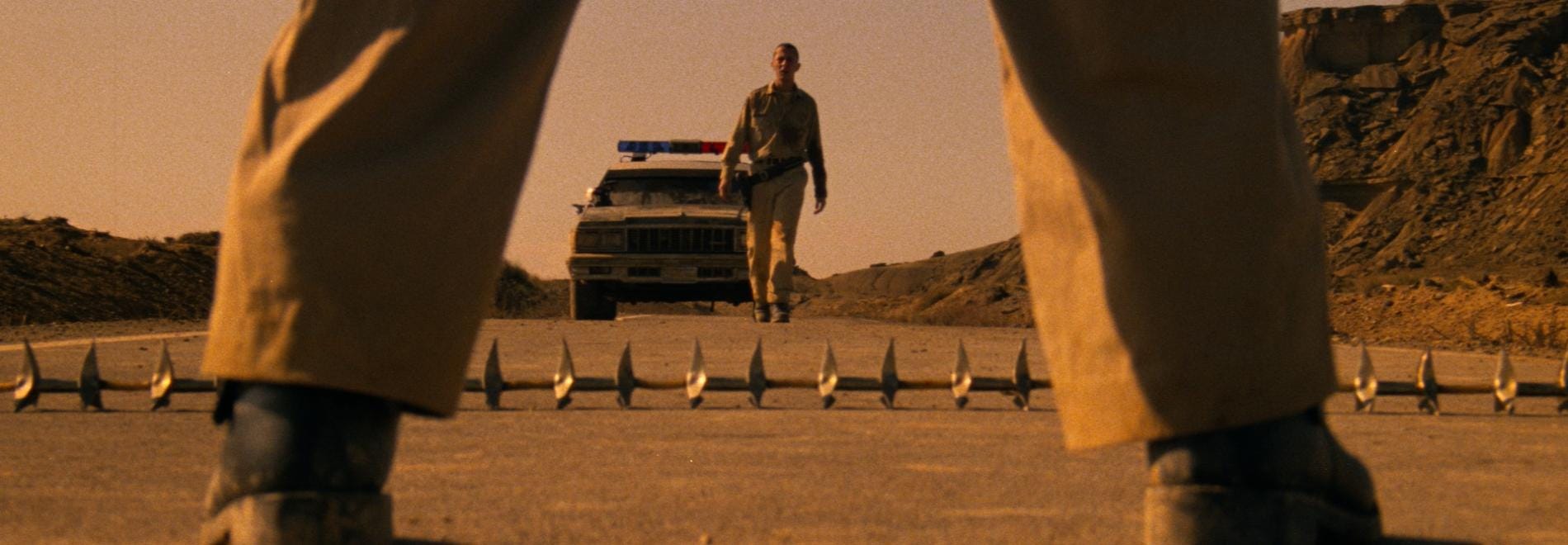
Also happening all November at Spectacle is the United States premiere of a new 4K restoration of Atolladero, the 1995 cyberpunk “paella western” written and directed by Óscar Aibar, and starring Iggy Pop in dubbed Spanish. This is a wild and (it should be noted) fairly taboo-shattering film, which I first saw on a bootleg DVD maybe a decade ago. Showing it in any form—let alone this jawdropping new restoration—is a late Spectacle dream. I agree with whoever wrote, “Aibar’s feature debut as writer-director is must-see genre cinema, consistent with other antic visions emerging from post-Franco Spain such as Alex de la Iglesia’s Accion Mutante and Julio Medem’s The Red Squirrel. (It may also be of special interest for fans of Sergio Leone, Alex Cox, the Coen Brothers, Mad Max or A Boy and His Dog)…”
Similarly not for the faint-of-stomach: for Filmmaker Magazine I interviewed actor-director Alex Winter and prosthetic makeup wizard Bill Corso about Freaked, the 1993 gross-out horror comedy classic directed by Winter (at that moment, one of Hollywood’s hottest Gen X stars thanks to the Bill and Ted franchise) and his writing partner Tom Stern. While I don’t know yet about repertory screenings in New York or Los Angeles, Freaked has just been restored in 4K, and is now available to rent on VOD, plus Umbrella Entertainment has put out a gorgeous 3-disc blu ray box set with tons of extras, if that’s your bag.
I’m in today’s Screen Slate with some quick thoughts on Elvira Madigan, a 1967 Swedish period piece that caused a considerable stir upon its initial release in New York City but remains fairly obscure today. One big reason for that is its filmmaker Bo Widerberg was a dedicated leftist who positioned himself in many ways as the anti-Bergman1. I tried over the years to poke into the idea of a Widerberg retrospective, being told on two different occasions by Swedish Film Institute representatives that they (still) had their hands full with Bergman stuff2, so the Film Forum series kicking off tonight feels like manna from heaven.
Last thing - I wrote about a different Swede in Screen Slate a few weeks back, when Film Forum gave a week-run to Göran Hugo Olsson’s 3.5 hour documentary Israel Palestine on Swedish TV 1958-1989, comprised solely of footage from the archives of Swedish public television between the years indicated. While a Screen Slate writeup is technically supposed to function as a recommendation, I’m grateful to editor Nico Pedrero-Setzer for helping give me a platform to express some misgivings about Olsson’s approach to the material, which I found amateurish at worst and baffling at second-worst. The NYC run has ended but the film has distribution via Icarus.
See you at the movies; I hope to have a new piece of criticism (!) about a work of mainstream-ish contemporary cinema (!!!) ready next week.
Current Mood: Tired
Current Music: The Game - Money
Promoting Joachim Trier’s guaranteed-to-be-trash new film Sentimental Education this past summer, Stellan Skarsgård made headlines by forcefully aligning Bergman with Nazism, claiming Bergman was “the only person I know who cried when Hitler died”. I’m all for taking Bergman off the pedestal, but apart from the fact this info is impossible to confirm (Skarsgård was born six years after the end of the Third Reich), it’s a “bombshell” that gets dropped every few years, including by Roy Andersson when I interviewed him in 2015 about the conflict between Widerberg and Bergman at the Swedish Film Institute, which was brand new during the protest era of the mid-to-late Sixties.
Still proud I managed to organize a screening of The White Game, the omnibus protest documentary spearheaded by Widerberg, concerning students in the Swedish town of Båstad who successfully shut down the 1968 Davis Cup tennis match between the Swedish national team and that of the apartheid regime of then-Rhodesia. The film is of note for many reasons, including shining a light on small-town nativism via the participation of a very young Andersson, who appears onscreen at one point. The night before the screening, I stayed up finishing the timing of the substitles, and I think we had eight ticketbuyers in the end… This was part of “Frozen Revolutions”, a 2018 series I did at UnionDocs commemorating the half-centennial of 1968. The other films were El Grito, by Leobardo Lopez Arretche, the Cinetracts made by Jean-Luc Godard and the Dziga Vertov Group, and Klaus Wildenhahn’s made for German TV documentary Harlem Theater.